


The first time you take your baby abroad, the holiday begins long before the plane leaves the runway. There is the mental list of naps, feeds, sun hats and spare muslins; the worry that everyone else will be relaxing while you are trying to recreate bedtime in an unfamiliar room. But a first holiday with a baby in Spain can feel far less daunting when the setting, the pace and the practical details are chosen with real family life in mind.
Spain has a particular gift for this stage of parenthood: bright mornings, long lunches, easy outdoor living and a culture that genuinely welcomes little ones.
The trick is not to plan a pre-baby holiday with a baby added on. It’s to choose somewhere that works for your baby’s needs while giving you the chance to relax and enjoy yourselves too.
Why Spain works for a first holiday with a baby
For families travelling from the UK, Spain offers the reassuring combination of a short flight, reliable sunshine and no complicated time difference to disrupt an already delicate sleep routine. A morning flight can mean an afternoon settling into your accommodation, rather than arriving at midnight with a wide-awake baby and nowhere to make a bottle.
The Mediterranean rhythm helps, too. Breakfast can be unhurried, days naturally revolve around shade and naps, and dinner does not need to be an endurance test in a formal restaurant. A simple supper on your own terrace, with the baby monitor nearby and warm air drifting through the doors, is often more restorative than the evening you imagined before becoming parents.
Spain is not one single experience, of course. A city break can be wonderful with a compact pram and a baby who sleeps on the move, but it also brings pavements, queues and the challenge of finding a quiet place to reset. For a first trip, many parents find that the countryside or a smaller coastal town offers a gentler rhythm: less to navigate, more space to breathe, and no pressure to fill every day.
Travel out of high season
May, June, and September offer warm, sunny weather that’s ideal for babies without the intense, scorching heat and crowds of July and August. And before your child starts school, make the most of the freedom to travel outside school holidays, when flights and accommodation are usually cheaper. It’s a flexibility you’ll miss once school term dates start dictating your holiday plans!
Choose your accommodation before you choose the itinerary
With a baby, a beautiful hotel room can quickly feel small if there is nowhere to prepare breakfast, no separate space after bedtime, or no safe patch of shade in which to put down a play mat. Look for a proper home-from-home rather than simply a room that allows children.
A kitchenette makes early bottles, snacks and the occasional familiar supper easy. A terrace or private outdoor space means you are not confined to darkness at seven o’clock. A separate bedroom, or at least a thoughtfully arranged sleeping area, can make the difference between whispering in the bathroom and enjoying an evening together.
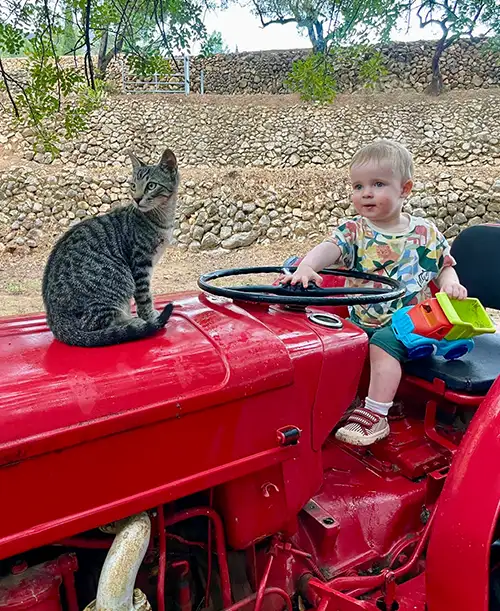
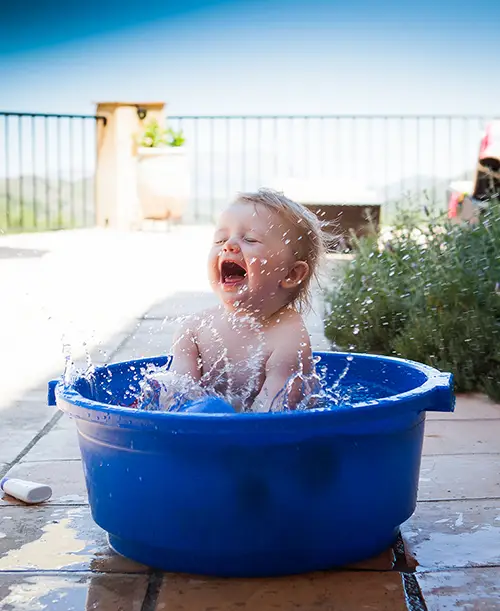
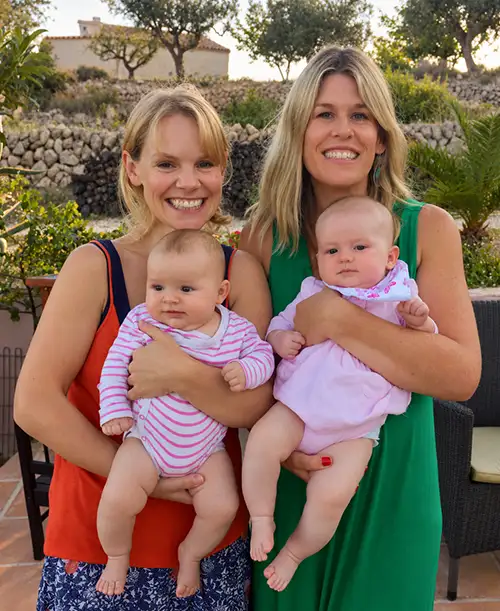
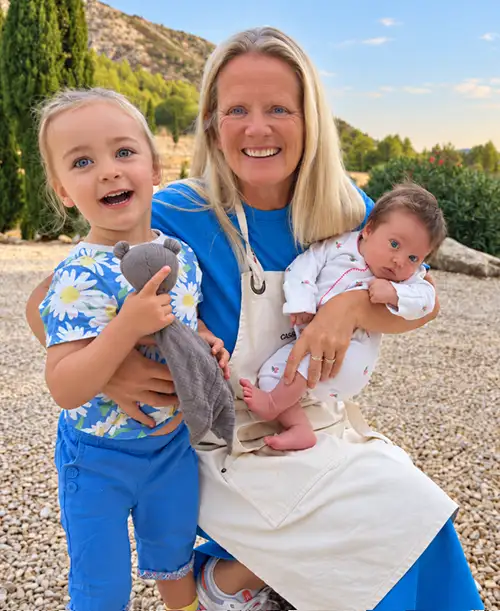
Choosing accommodation with direct access to a beautiful outdoor space, or better still, a relaxing pool area just a few steps away, means you can make the most of your baby’s naps to enjoy some well-earned downtime yourself. Small, friendly boutique hotels like Caserío del Mirador can be particularly good for this. With just a handful of families, a relaxed atmosphere where everyone quickly gets to know one another, and rooms close to the communal areas, parents can enjoy a coffee, read by the pool or chat with new friends while keeping an eye on their sleeping baby through a monitor. Think of it like being at home, where you can enjoy the garden or get on with your day while your baby naps, rather than spending every nap time sitting in a darkened bedroom.
Choose a hotel designed for families with babies and toddlers
A hotel which provides a cot, highchair, steriliser, changing mat and baby monitor means a lot less luggage and decision-making. At Caserío del Mirador in the Jalón Valley, everything is designed to make holidays with little ones easier: accommodation with kitchenettes, separate living spaces and terraces and all the baby kit provided. The setting also gives parents the rare pleasure of sitting down with a coffee and enjoying the beautiful views while little ones are kept busy with the age-appropriate toys provided.
One of the biggest advantages of choosing accommodation designed for babies and preschoolers, particularly outside school holidays, is being surrounded by families at the same stage of life. Nobody bats an eyelid at a crying baby or a disrupted mealtime. Instead, parents swap stories, share experiences and pick up useful tips from those with slightly older children. At Caserío del Mirador, these conversations happen naturally, with Sarah, the owner, often joining in with her own advice. It’s reassuring to be among people who understand exactly what life with a little one is like.
Keep travel day deliberately light
A calm holiday starts with lowering the stakes of the journey. Book a flight time that suits your baby’s most settled part of the day where possible, but do not worry if naps happen differently. A carrier is often invaluable for airport queues and boarding, while a lightweight pram is useful at the other end when everyone needs a rest.
For hand luggage, think less about bringing every conceivable item and more about access. Keep feeds, nappies, wipes, two changes of clothes, a muslin, a familiar comforter and a small selection of quiet distractions within immediate reach. Pack more nappies than you expect to use on the flight, especially if a delay would leave you short.
Once you arrive, resist the temptation to start sightseeing. Pick up a few basics, unpack only what you need and allow the first afternoon to be ordinary. A feed, a bath, a short walk and an early bedtime will do more for the next few days than a hurried excursion ever could.
Protect sleep without chasing perfection
Babies rarely read holiday plans. Some sleep brilliantly in a new place; others need a day or two to understand that this cot, this darkened room and these bedtime songs are now home. The aim is familiarity, not a flawless routine.
Take the small cues that signal sleep at home: the sleeping bag, white noise, favourite book or same lullaby. Try to keep bedtime broadly similar, especially in the first couple of nights, while allowing daytime naps to be more flexible. A buggy nap beneath an olive tree or a carrier nap on a quiet village walk is still a nap.
Think carefully about heat as well. In high summer, outdoor time is best enjoyed in the morning and later afternoon, with a cool, shaded indoor space available at midday. Lightweight layers, a sun hat and regular milk feeds are more useful than trying to keep a busy itinerary on track. If your baby is very young, or you are travelling in July or August, a cooler inland setting may be more comfortable than a baking beachfront promenade.
Keep Mealtimes Flexible and Stress-Free
Feeding your baby on holiday can be one of the biggest concerns when travelling for the first time. Spain is generally very welcoming to babies and young children, but eating out every evening can become tiring when you’re working around feeding times, naps and early bedtimes.
A mix works best. Keep easy breakfasts and a few familiar foods in your accommodation, enjoy lunch out when babies are often happiest, and choose flexible evening options. Good family-focused stays make this easier with freshly prepared food, earlier suppers or meals you can eat close to your own front door.
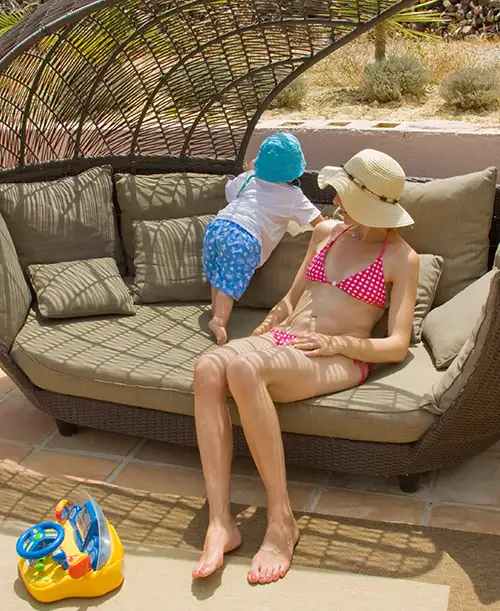
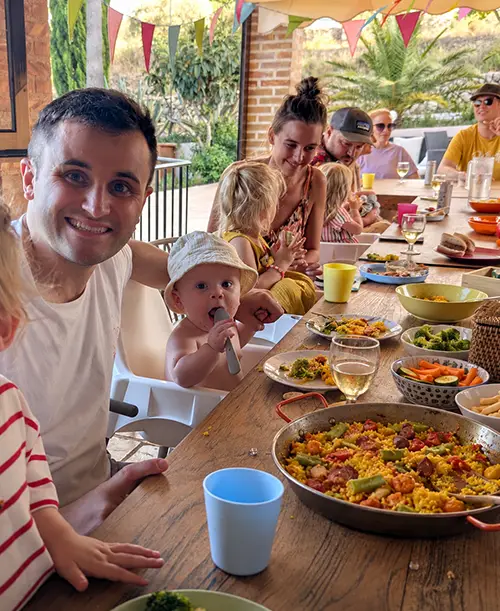
If your baby is weaning, bring a few dependable snacks for the journey, then make the most of simple local ingredients: soft fruit, yoghurt, bread, avocado, rice, vegetables and grilled fish where appropriate. There is no need to turn holiday food into a project. A few reliable options alongside tastes of whatever is on your plate is enough. Choose accommodation which offers relaxed family friendly dining where no one worries about a few bits of pasta and broccoli ending up on the floor.
Make room for both parents to have a holiday
The emotional shift of a first holiday with a baby is often this: you stop measuring it against the holidays you took before children. A successful break may include an early start, an unexpected nap in the car and one parent taking a slow coffee while the other watches a very serious investigation of pebbles. That is not a lesser version of travel. It is a different kind of luxury.
Choose somewhere that gives everyone a little breathing space. One parent can read in the shade while the other takes the baby for a gentle wander. After bedtime, a private terrace means you can enjoy a quiet dinner together while your baby sleeps inside, with a baby monitor close at hand. And if there are other young families staying, the chance to share a meal or a glass of wine can be just as welcome as time alone.
Do not over-plan local outings. One beautiful market, one shady lunch, one short beach visit or village walk is plenty for a day. The Jalón Valley, for example, rewards a slower approach: mountain views, vineyards, almond groves and the kind of warm, unhurried days that make a baby carrier feel like the only transport you need.
Your first trip away is not a test of how efficiently you can parent in another country. It is a chance to discover that family life can feel lighter somewhere new – with fresh croissants in the morning, Mediterranean air at nap time and a star-filled sky after your little one has fallen asleep.